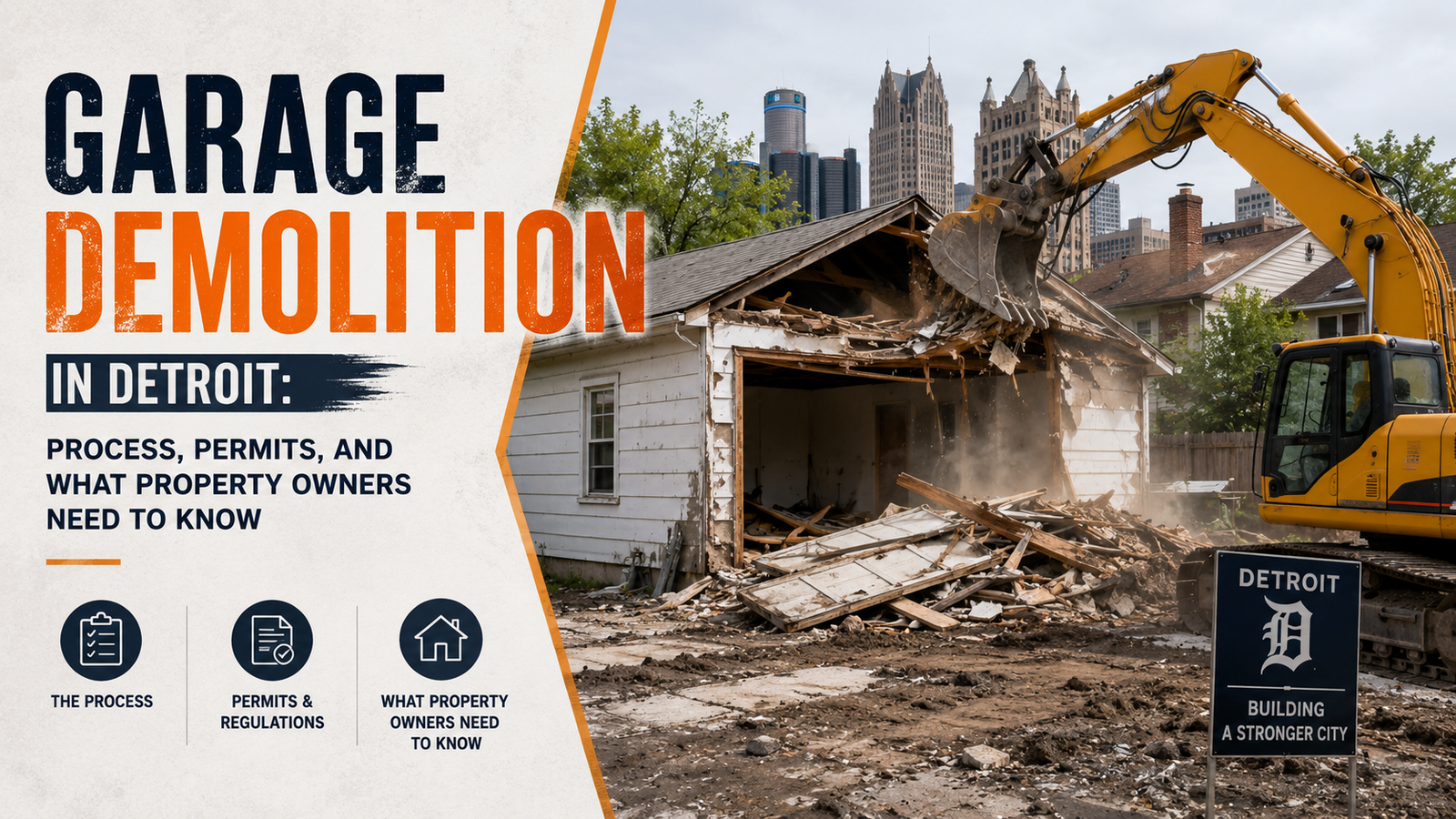
Detached garages are among the most commonly demolished structures in Detroit and Southeast Michigan. Whether a garage has deteriorated beyond practical repair, is in the way of a new construction project, or simply needs to be replaced with a modern structure, Garage Demolition Detroit is a straightforward but not trivial undertaking. Detroit’s older housing stock much of it built between 1920 and 1960 when detached garages were standard components of residential properties includes a significant number of garages that have reached the end of their useful lives. This guide explains what garage demolition in Detroit involves, from permits through cleanup.
Why Garages Get Demolished in Detroit
Structural deterioration is the most common reason garages are demolished rather than repaired in Detroit. Older Detroit garages were typically built with wood-frame construction on shallow concrete footings, and decades of exposure to Michigan’s climate severe winter freeze-thaw cycles, heavy snowfall loads, summer humidity, and rainstorms take a significant toll. Foundation heaving, sill plate rot, deteriorated siding, failed roofing, and compromised framing are all common conditions in older Detroit garages. When repair costs exceed the practical value of the structure, demolition and removal is the logical choice.
Fire damage accounts for another category of garage demolitions. Garage fires often started by vehicle-related causes, improper storage of flammable materials, or electrical issues in older wiring can render a garage unsafe and beyond economical repair. Post-fire assessment by a structural engineer or experienced contractor determines whether rehabilitation is feasible or whether demolition is the appropriate course.
Development and renovation projects drive garage demolition in a different way. Homeowners adding a new larger garage, accessory dwelling unit (ADU), or yard feature often need to remove the existing garage to make way. In commercial contexts, properties being redeveloped may have multiple outbuildings including garages, all of which must be cleared before new construction begins.
Does Garage Demolition Require a Permit in Detroit?
In Detroit, demolition of a detached garage does require a permit from the City of Detroit Buildings, Safety Engineering, and Environmental Department. The permit process confirms that the planned demolition meets code requirements, that the contractor is a city-approved Wrecking Contractor with valid Michigan contractor licensing, and that appropriate insurance is in place.
Property owners sometimes attempt garage demolitions without permits, which creates several risks: potential fines if the unpermitted work is discovered, complications when selling the property (as unpermitted demolition work may appear in title searches or property records), and the absence of any official confirmation that work was completed properly. Working with a licensed contractor who manages the permit process as part of the project scope is the professional and risk-free approach.
Hazardous Materials in Detroit Garages
Older Detroit garages may contain hazardous materials that require specific handling before demolition. Asbestos was used in some garage construction products including roofing shingles (particularly the gray transite-style fiber cement shingles used in older construction), floor tiles, and in some cases siding materials. If the garage being demolished is of uncertain age or the roofing and flooring materials appear potentially problematic, an asbestos inspection before demolition is prudent.
Lead-based paint is present on many older Detroit garage structures. While lead paint on a garage being completely demolished is less of a confined-space exposure concern than interior lead paint, it still affects debris handling and disposal requirements. Debris from structures with known lead paint requires appropriate waste management treatment.
Petroleum contamination is a realistic concern in garages that have housed vehicles for many decades. Oil drips, fuel spills, and solvent use can contaminate the garage floor slab and underlying soil over time. If the soil beneath the garage slab shows evidence of petroleum contamination during demolition, professional remediation may be required before the site is cleared.
The Garage Demolition Process
Permit in hand and any hazardous materials addressed, the physical garage demolition proceeds. For most Detroit detached garages one or two-car, single-story wood-frame structures an excavator is the primary demolition tool. A mini-excavator is often preferred for residential garage demolition because it can access typical Detroit rear yards through a standard 36-to-48-inch gate opening and maneuver within the confined space of a typical city lot.
The excavator works systematically from the roof downward first collapsing the roof structure, then the wall framing, and finally clearing the slab and any foundation elements. The slab and footings are broken with a hydraulic breaker attachment and removed. Utility service connections to the garage (electrical, in most cases) must be disconnected by an electrician before demolition work begins.
All resulting debris framing lumber, roofing material, siding, and broken concrete is loaded into a dump truck or container and hauled away. Metal components including nails, bolts, metal roofing, and any steel framing are typically separated for scrap recycling. The cleared area is graded smooth, restoring the yard to a level, clean condition.
Common Questions About Garage Demolition in Detroit
Can I demolish my own garage in Detroit? Homeowners can technically perform their own demolition work in some jurisdictions, but Detroit’s permit process requires that demolition work be performed by a city-approved Wrecking Contractor with applicable state licensing. Hiring a licensed professional protects you from liability, ensures the work meets code, and guarantees that debris is properly disposed of.
How long does garage demolition take? Most single-car or two-car garage demolitions in Detroit are completed in a half day to a full day of work. The physical demolition is typically the fastest part of the overall project timeline permitting, utility disconnection coordination, and scheduling typically require additional lead time.
What happens to the concrete slab? The concrete slab can be removed entirely (typical when the cleared area will be used for landscaping, new construction, or other surface uses), or in some cases a sound existing slab can be left in place if a new garage will be built in the same footprint. Most garage demolition projects include full slab removal to allow flexibility in how the cleared space is used.